Sent Na Po: a short drama series about a karinderya owner
Sent Na Po is TAYP's eight-part short drama series about Bebang, a karinderya owner everyone underestimates. All eight parts in order, and what's real in them.
Sent Na Po is a short drama series by TAYP about Bebang, a karinderya owner everyone underestimates. It has eight parts of about 45 seconds each, in Taglish, and a new part comes out every Monday and Thursday at 7pm.
Bago ka pa lang? Simulan sa Part 1: Minaliit. Kung may na-miss ka, nasa baba ang walong parts, sunod-sunod, at may sariling maikling article ang bawat isa.
What is Sent Na Po about?
"Sent na po" is what a customer says when they claim the payment has gone through. Sellers hear it all day, and sometimes the money never arrives. The series starts with that line and goes on to the rich restaurant owner who laughs at your stall, and the anak who thinks your way of doing things is luma na.
The story takes the side of the small business. Its villain is arrogance, never poverty.
Is Bebang a real person?
No. Bebang is a fictional character, and the series is a skit made with AI video. She is not a real store owner and not a TAYP customer. Mika, Madam Chona and the rival are fictional too.
Sino-sino ang mga tauhan?
Bebang runs a small karinderya (or carinderia, depende sa spelling mo). May notebook sa counter, kalmado ang ngiti niya, at laging nakataob ang phone. People see the stall and the notebook and decide she's small. Hindi nila alam ang buong kuwento.
- Mika, her Gen Z daughter, who keeps telling her, "Ma, get a system na."
- Madam Chona, the customer who always says "Sent na po" and never pays.
- The rival, a rich restaurant owner who laughs at the stall: "Notebook pa rin?"
- The Notebook, which never leaves the counter.
All eight parts of Sent Na Po, in order
Light spoilers from Part 5 down. Kung ayaw mo, manood ka muna.
- Part 1: Minaliit. The rival mocks her stall and her notebook in front of her customers. Ngumiti lang siya.
- Part 2: Sent Na Po. Madam Chona shows a fake payment screenshot. Bebang lets it go, and her phone won't stop buzzing.
- Part 3: Ang Mga Rider. Riders keep arriving for orders nobody at the stall took. Nagtataka na si Mika.
- Part 4: Ang Hamon. The rival dares her in public: 500 trays for the fiesta. Nagtawanan ang lahat.
- Part 5: Ang Lihim. We finally see what's on her phone.
- Part 6: Ang Fiesta. 500 trays. Kalmado. On time.
- Part 7: Hindi Nila Alam. The rival learns who he has really been up against.
- Part 8: Paalam, Notebook. No more hiding, and a hint of Season 2.
Which parts of the series are real?
The screens. The story is fiction, but Bebang's system is TAYP, and the dashboard, the kitchen board and the orders you see on screen are real product screens. They were recorded from the product and added in the edit, not generated by AI.
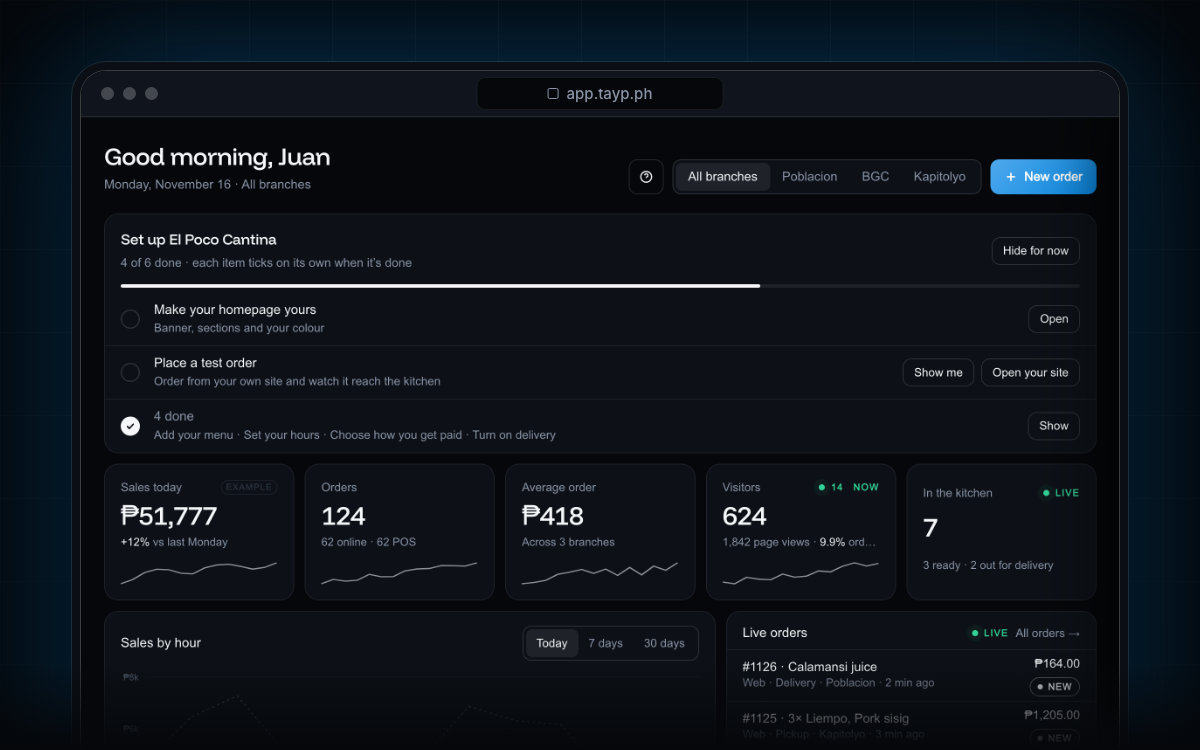 The real TAYP dashboard, here in a demo store with Example numbers. The series uses this same product screen.
What they do in the series is what they do in a restaurant. Orders from the website, the POS and table QR land in one list, the kitchen hears a chime when a new one arrives, and a rider is booked from the order. We go through each screen in our walkthrough of the dashboard, orders list and kitchen board from Episode 5.
Kung drama ang hanap mo, start at Part 1. If you would rather skip to the system, read Your restaurant's own ordering website: how it works, or see the Restaurant plans.
See it working in TAYP.
One command center for your products, orders, payments and delivery, set up and managed for you.